

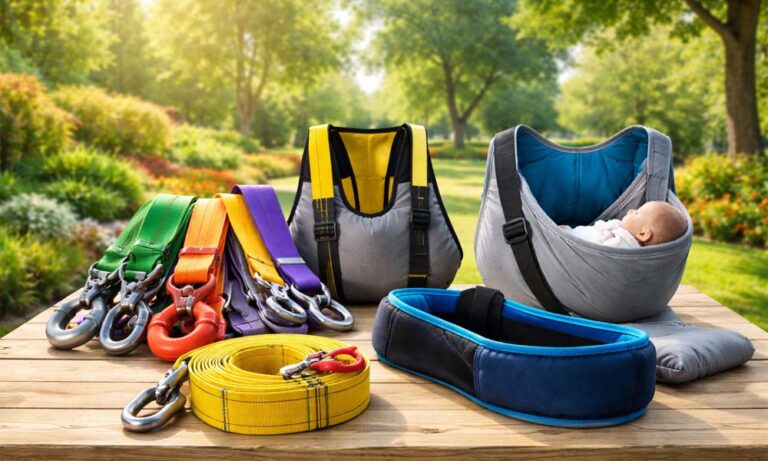
Introduction: What Exactly Are Slinguri and Why Do They Matter?
Have you ever wondered how extremely heavy objects like steel beams, shipping containers, or industrial machinery are safely lifted and moved without damage or accidents? The answer often lies in a simple but powerful tool known as slinguri.
In many industries, especially construction, logistics, manufacturing, and shipping, slinguri play a silent but critical role. These lifting tools are designed to bear heavy loads securely while ensuring stability and safety during transportation. Even though they might look like just ropes, belts, or chains, they are actually engineered products built with precision and strict safety standards.
Slinguri come in different forms, materials, and strength ratings depending on their use. From textile slings used in delicate operations to steel chain slings used in heavy-duty lifting, each type has its own purpose. Without them, modern industrial lifting operations would be far more dangerous and inefficient.
In this article, we will explore slinguri in depth—what they are, how they work, their types, applications, safety guidelines, and how to choose the right one. Whether you are a beginner or someone working in logistics or construction, this guide will give you a clear and practical understanding.
Understanding Slinguri: Meaning, Function, and Core Concept
Slinguri are flexible lifting devices used to attach a load to a crane, hoist, or other lifting machinery. Their main function is to distribute weight evenly so that heavy objects can be lifted safely without slipping or causing structural damage.
At their core, slinguri act as a connection point between the load and the lifting equipment. They absorb tension, reduce shock during lifting, and help maintain balance. This makes them essential in industries where precision and safety are non-negotiable.
Interestingly, slinguri are not a modern invention. Simple versions of lifting slings have been used for centuries, but modern engineering has significantly improved their strength, durability, and safety features. Today’s slinguri are tested under strict industrial regulations to ensure they can handle extreme loads without failure.
Another important aspect is that slinguri are not one-size-fits-all tools. Different loads require different types of slings. For example, delicate materials like glass or painted surfaces require soft textile slinguri, while heavy steel structures demand robust chain-based slinguri.
Types of Slinguri and Their Unique Characteristics
Slinguri come in several types, each designed for specific lifting needs. Understanding these types is essential for choosing the right one for any operation.
1. Textile Slinguri (Webbing Slings)
Textile slinguri are made from high-strength synthetic fibers like polyester or nylon. They are lightweight, flexible, and gentle on delicate surfaces, making them ideal for handling fragile goods.
These slinguri are commonly used in industries where scratching or surface damage must be avoided. For example, they are often used in automotive, aerospace, and furniture handling operations.
Despite their softness, textile slinguri are incredibly strong and can lift several tons depending on their rating. However, they are sensitive to sharp edges and require careful handling.
2. Chain Slinguri
Chain slinguri are made from high-grade steel chains and are designed for heavy-duty lifting. They are extremely durable and resistant to heat, abrasion, and harsh industrial environments.
These slinguri are commonly used in construction sites, shipyards, and manufacturing plants where extremely heavy loads are frequent. Unlike textile slings, chain slinguri can withstand rough surfaces and high temperatures.
One of their key advantages is adjustability. Operators can modify chain lengths to balance uneven loads, making them highly versatile in complex lifting tasks.
3. Wire Rope Slinguri
Wire rope slinguri are made from twisted steel wires and offer a balance between flexibility and strength. They are widely used in industrial lifting operations where durability and load stability are required.
These slinguri are particularly effective for outdoor use because they can withstand weather conditions better than textile slings. They are also resistant to stretching, which ensures stability during heavy lifts.
However, wire rope slinguri can be harsh on delicate surfaces, so they are not suitable for fragile materials.
4. Round Slinguri
Round slinguri are a specialized type of textile sling made in a continuous loop. They are encased in a protective sleeve and are known for their high flexibility and load distribution capabilities.
These slinguri are ideal for lifting irregularly shaped objects because they conform easily around the load. They also reduce pressure points, which helps prevent damage during lifting.
Applications of Slinguri Across Different Industries
Slinguri are used in a wide range of industries, each relying on them for safe and efficient lifting operations. Their versatility makes them one of the most important tools in modern material handling.
Construction Industry
In construction, slinguri are used to lift steel beams, concrete blocks, scaffolding materials, and heavy machinery. They ensure that large components can be positioned accurately and safely at elevated heights.
Without slinguri, construction projects would face serious safety risks and delays. Their role in ensuring structural stability during installation cannot be overstated.
Shipping and Logistics
The shipping industry relies heavily on slinguri to load and unload cargo containers, crates, and heavy goods. Cranes equipped with slinguri can move massive loads quickly and efficiently in ports and warehouses.
This improves productivity while minimizing the risk of cargo damage or accidents during handling.
Manufacturing Industry
Factories use slinguri to move raw materials, machine parts, and finished products. In assembly lines, they help transport heavy components between production stages.
Their precision and reliability make them essential in maintaining smooth industrial workflows.
Oil, Gas, and Energy Sector
In the energy sector, slinguri are used to handle heavy drilling equipment, pipelines, and turbines. These environments often involve extreme conditions, making durable slinguri essential for safe operations.
Safety Guidelines and Best Practices for Using Slinguri
Safety is the most important aspect when working with slinguri. Even the strongest sling can fail if it is not used correctly, so proper handling is essential.
One of the first rules is always to inspect slinguri before use. Any signs of wear, cuts, rust, or deformation should be taken seriously. Damaged slinguri should never be used under any circumstances.
Another important practice is load rating awareness. Every slinguri has a maximum weight capacity, and exceeding this limit can lead to catastrophic failure. Operators must always know the exact weight of the load being lifted.
Proper attachment is also critical. Slinguri should be positioned in a way that distributes weight evenly. Incorrect angles or knots can significantly reduce lifting capacity and increase risk.
Training is equally important. Workers should be properly trained in handling slinguri and understanding lifting techniques. This reduces human error and ensures safer operations across all environments.
How to Choose the Right Slinguri for Your Needs
Selecting the right slinguri depends on several factors, including load type, weight, environment, and surface sensitivity.
For delicate materials, textile slinguri are usually the best choice because they prevent surface damage. On the other hand, for extremely heavy industrial loads, chain slinguri offer the highest strength and durability.
Environmental conditions also play a major role. If lifting is done outdoors or in harsh conditions, wire rope slinguri may be more suitable due to their resistance to weather and abrasion.
Another important consideration is flexibility. Round slinguri are ideal when working with irregular shapes because they adapt easily around different load forms.
Ultimately, choosing the right slinguri requires balancing safety, efficiency, and material compatibility.
Maintenance, Inspection, and Longevity of Slinguri
Proper maintenance of slinguri is essential for ensuring long-term performance and safety. Regular inspection helps identify early signs of damage before they lead to failure.
Textile slinguri should be stored in dry, cool environments away from direct sunlight, as UV rays can weaken synthetic fibers over time. They should also be kept away from chemicals that may degrade the material.
Chain slinguri require periodic lubrication and inspection for cracks, elongation, or rust. Any deformed links should be replaced immediately to maintain safety standards.
Wire rope slinguri should be checked for broken wires, corrosion, and kinks. These issues can significantly reduce their load-bearing capacity and should never be ignored.
A proper maintenance routine not only extends the lifespan of slinguri but also ensures consistent safety in lifting operations.
Future Trends and Innovations in Slinguri Technology
The future of slinguri is evolving with advancements in materials science and industrial automation. Manufacturers are constantly developing stronger, lighter, and more durable lifting solutions.
One emerging trend is the use of smart slinguri equipped with sensors. These sensors can monitor load weight, tension, and stress levels in real time, helping prevent accidents before they happen.
Another innovation is the development of ultra-high-performance synthetic fibers. These materials offer greater strength while remaining lightweight and flexible, making them ideal for next-generation textile slinguri.
Automation in logistics and construction is also influencing slinguri design. As robotic cranes and automated lifting systems become more common, slinguri are being adapted for greater precision and compatibility with digital systems.
These advancements are making lifting operations safer, more efficient, and more intelligent than ever before.
Conclusion: Why Slinguri Remain Essential in Modern Industry
Slinguri may seem like simple tools, but they are absolutely vital to modern industrial operations. From construction sites to shipping ports, they ensure that heavy loads are moved safely, efficiently, and accurately.
Their variety—textile, chain, wire rope, and round slinguri—allows them to meet the demands of different industries and applications. When used correctly, they significantly reduce risks and improve productivity.
As technology continues to advance, slinguri will only become more reliable and sophisticated. However, their core purpose will remain the same: to lift, support, and move heavy loads safely.
Understanding slinguri is not just important for professionals in logistics or construction—it is essential knowledge for anyone involved in material handling. With proper selection, usage, and maintenance, these
